
Joshua Tree National Park contains rugged mountains, enormous boulder formations, wide desert valleys, and its famous namesake trees. Yet one of its most memorable landscapes comes from a much smaller plant with a surprisingly dramatic presence.
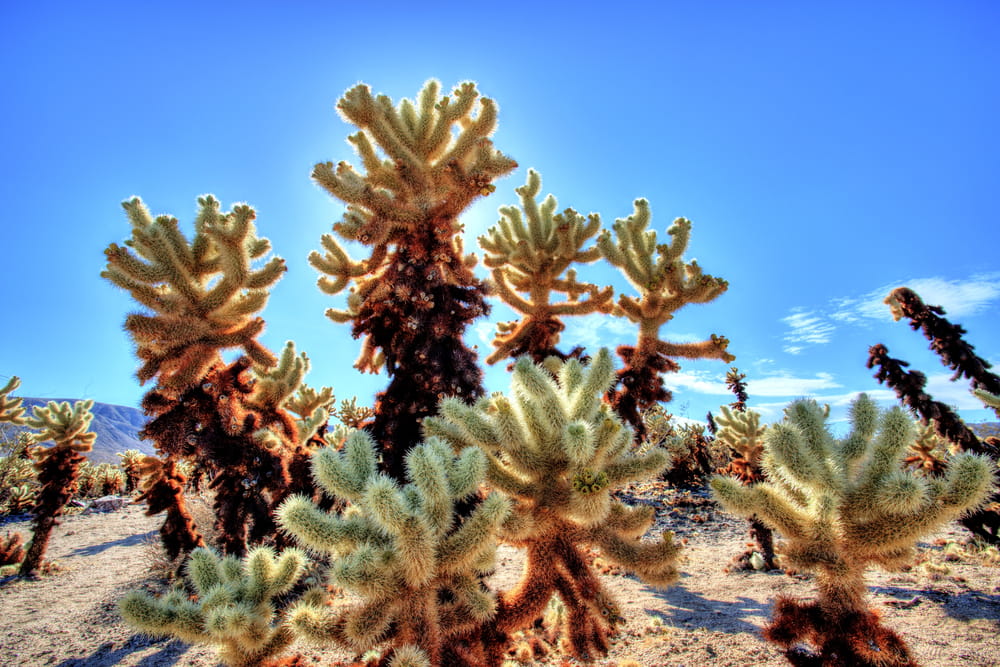
Cholla Cactus Garden features a dense concentration of teddy-bear cholla spread across an open section of the Colorado Desert. Located within driving distance of Palm Springs, CA, this natural garden allows visitors to walk through a landscape that looks especially striking in the soft morning or late-afternoon light.
The trail is short, but the experience deserves more than a rushed stop. Understanding the plants, preparing for desert conditions, and following basic safety rules can make the visit both enjoyable and memorable.
What Makes Cholla Cactus Garden Special
Cholla Cactus Garden is not a landscaped attraction created by gardeners. It is a naturally occurring concentration of cholla that developed because the area provides favorable elevation, drainage, soil, and climate conditions.
Thousands of cactus stems fill the surrounding landscape, creating an unusual scene that appears almost soft and golden from a distance. That appearance explains the common name “teddy-bear cholla,” although the plant is anything but cuddly.
Its dense covering of sharp spines helps protect the cactus and reflects sunlight. During sunrise or sunset, those spines can catch the light and create a glowing effect across the garden.
Visitors traveling from Palm Springs, CA often include this stop as part of a longer Joshua Tree National Park drive. Although the walking loop is relatively brief, the scenery feels completely different from the rocky areas and Joshua tree forests found elsewhere in the park.
The location also demonstrates how quickly desert ecosystems can change. Differences in elevation and environmental conditions allow distinct plant communities to grow within the same national park.
Walking the Nature Trail
The nature trail offers a straightforward way to enter the garden and view the plants from several angles. The path is generally short and manageable, making it suitable for visitors who may not want to complete a long desert hike.
However, easy distance does not mean visitors should ignore the terrain. Loose rocks, uneven ground, intense sunlight, and nearby cactus segments require attention with every step.
Stay on the established path and avoid stepping backward without checking the ground. Cholla segments can fall near the trail, and their pale coloring may make them difficult to notice against sand or gravel.
Families visiting from Palm Springs, CA should keep children close and explain the importance of not touching the plants. Pets should remain under careful control and follow all current park regulations.
Move slowly enough to enjoy the scenery. Looking across the entire garden provides a different perspective from studying the structure of a single cactus. The combination of distant mountains, open sky, and densely packed plants makes the short walk visually rewarding.
Why You Should Never Touch the Cholla
The teddy-bear name can create the wrong impression. Cholla spines have tiny barbs that can attach easily to clothing, shoes, skin, or animal fur. Even light contact can cause a cactus segment to break away and remain attached.
Do not test the spines, lean close for a photograph, or attempt to remove loose segments from the trail. A small mistake can quickly become painful and difficult to manage.
Wear closed-toe shoes rather than sandals. Long pants can provide additional protection, especially for children or visitors unfamiliar with desert trails.
People traveling from Palm Springs, CA may also want to carry a basic first-aid kit and a sturdy comb or multitool for emergencies. However, preventing contact remains far safer than attempting to remove embedded spines.
Wind can occasionally move loose cactus pieces, so give the plants more space than you think is necessary. Avoid sitting directly on the ground or placing bags near vegetation.
Respecting the cholla protects both visitors and the fragile garden. Damaging plants for photographs or souvenirs can harm a natural area that took years to develop.
Finding the Best Light for Photography
Cholla Cactus Garden has become a popular photography stop because the spines react beautifully to low-angle sunlight. Early morning and late afternoon typically produce softer light and more visible texture than the harsh middle of the day.
Backlighting can make the cactus appear to glow, but photographers should watch their footing while choosing an angle. Looking through a camera can make it easier to overlook loose segments near the trail.
Visitors coming from Palm Springs, CA for sunrise should prepare for an early departure and limited services along portions of the route. Bring water, confirm directions in advance, and download maps before entering areas with unreliable reception.
A wide view can capture the scale of the garden, while closer compositions can highlight patterns, shadows, and the structure of individual plants. Use a zoom lens rather than walking off the trail or moving too close.
Avoid blocking the path with tripods or equipment. Other visitors should be able to pass safely without stepping toward the cactus.
Preparing for Desert Conditions
The short trail can still expose visitors to serious desert conditions. Joshua Tree National Park may feel cooler than Palm Springs, CA on some days, but temperatures can change quickly, and shade is extremely limited.
Carry water even when you expect the stop to last only a few minutes. Sunscreen, sunglasses, a hat, and lightweight clothing can make the visit more comfortable.
During cooler months, mornings and evenings may become surprisingly cold. Bring an extra layer rather than assuming the desert remains warm all day.
Summer visits require additional caution. Extreme heat can make even a brief walk dangerous, particularly during the afternoon. Consider whether the stop is appropriate based on current temperatures and the health of everyone in your group.
Fuel your vehicle before entering remote sections of the park. Cell service may be unreliable, and distances between major destinations can be longer than they appear on a map.
Planning the Drive From Palm Springs
The Cholla Cactus Garden sits in the eastern portion of Joshua Tree National Park, so visitors should treat it as part of a larger driving itinerary rather than a quick stop immediately outside the city.
You can find directions to Cholla Cactus Garden. Check current road conditions, entrance information, weather, closures, and park alerts before leaving Palm Springs, CA.
Plan enough time for scenic stops without turning the day into a race. Joshua Tree’s desert views, rock formations, and changing plant life often make spontaneous stops worthwhile.
Bring food, water, and basic supplies because services inside the park are limited. Let someone know your route when traveling into remote areas, particularly during periods of extreme weather.
Continuing the Coachella Valley Location Series
Cholla Cactus Garden proves that a short nature trail can leave a lasting impression. Its glowing spines, mountain views, and dense desert vegetation create a landscape unlike anything found around the resorts of Palm Springs, CA.
To return to the beginning of this location series, explore A Visitor’s Guide to the Living Desert Zoo and Gardens in Palm Desert, CA. It offers another close look at desert wildlife and plants through animal habitats, botanical gardens, educational exhibits, and walking trails.
Creating Outdoor Spaces Inspired by the Desert
The garden also shows how texture, repetition, natural colors, and carefully placed materials can transform an outdoor environment. Homeowners can draw inspiration from these elements without bringing sharp or difficult plants close to high-traffic spaces.
Those considering pool decks in Palm Springs, CA can work with Innovative Concrete Design to explore decorative concrete options suited to desert homes, swimming areas, and everyday outdoor use.
A successful pool deck should support comfort, safety, and durability while complementing the surrounding landscape. Thoughtful colors and finishes can create a strong visual connection to the desert without sacrificing function.