
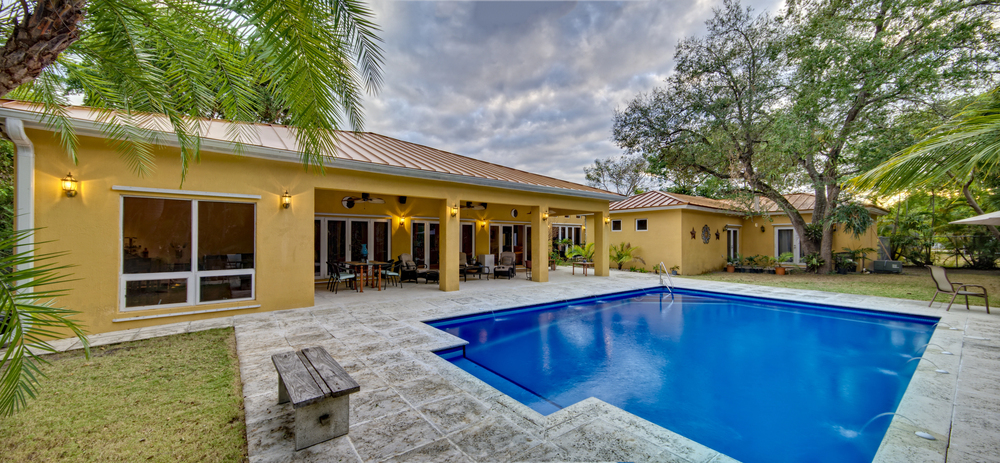
Pool decks endure demanding conditions throughout the year. Intense sunlight, high surface temperatures, pool chemicals, moisture, and regular foot traffic can gradually leave concrete looking worn, faded, or uneven. Small cracks and rough patches may also make the entire outdoor area feel older than it is.
For homeowners in Palm Springs, CA, the challenge is deciding whether resurfacing can restore the deck or whether complete replacement would provide better value. The answer depends on the condition of the underlying concrete, the type of damage present, and how you want the finished space to look and function.
Understanding the difference can help you avoid unnecessary demolition without covering up problems that require a more permanent solution.
What Pool Deck Resurfacing Actually Does
Resurfacing renews the top layer of an existing concrete deck. The contractor prepares the surface, repairs appropriate cracks and damaged areas, and applies a new overlay or decorative finish.
Depending on the selected system, the finished surface may include updated colors, textures, patterns, and slip-resistant features. Resurfacing can give older pool decks a completely different appearance while preserving the concrete slab underneath.
However, resurfacing involves much more than applying a coating over worn concrete. The existing deck must be cleaned thoroughly, and the contractor must remove loose or deteriorated material. Proper preparation creates a strong bond between the old concrete and the new surface.
When the original slab remains stable, this process can improve appearance, comfort, and usability without the cost and disruption of removing the entire deck.
Signs Resurfacing May Be the Better Choice
Resurfacing often works well when the visible damage is cosmetic or limited to the surface. Fading, stains, shallow pitting, worn texture, and small stable cracks do not always mean that the concrete needs replacement.
Many pool decks in Palm Springs, CA lose their original color after years of direct desert sunlight. Others develop worn areas that feel rough under bare feet or become slippery when wet. A resurfacing system can correct these concerns while creating a more attractive finish.
Resurfacing may also make sense when you want to update the style without changing the size or shape of the deck. New colors, borders, textures, and decorative details can complement the home, landscaping, and pool design.
The condition of the slab remains the most important factor. If the concrete has not sunk, lifted, shifted, or broken into unstable sections, resurfacing may offer a practical and long-lasting improvement.
When Replacement Is the Smarter Decision
Some pool decks require more than surface repairs. Complete replacement usually makes more sense when the slab has severe structural damage, extensive movement, or widespread deterioration.
Deep cracks that continue to widen may point to settlement, soil movement, or poor preparation beneath the original slab. Uneven sections can create trip hazards and interfere with drainage. Large broken areas or severe crumbling may also prevent a new overlay from bonding reliably.
Resurfacing cannot stop an unstable slab from moving. An overlay might temporarily hide the damage, but cracks can eventually return through the new finish.
Replacement allows the contractor to remove the failing concrete, inspect the base, correct preparation problems, and build the deck again. It may also be necessary when homeowners want to expand the pool area, change elevations, relocate drains, or redesign the layout.
How the Coachella Valley Climate Affects Concrete
The Coachella Valley creates challenging conditions for exterior concrete. Strong sunlight can fade decorative finishes, while high daytime temperatures heat the slab and cause it to expand. As temperatures fall, the concrete contracts.
Repeated temperature changes may contribute to cracking, especially when the deck lacks properly placed joints or sits on an unstable base.
Pool water creates additional exposure. Chlorine, salt, moisture, and other chemicals can affect finishes over time. Irrigation overspray and mineral-rich water may also leave deposits or discoloration around the surface.
Because of these conditions, pool decks in Palm Springs, CA need finishes designed for heat, water, and regular outdoor use. Before recommending resurfacing, a contractor should evaluate sun exposure, drainage, existing cracks, and the overall stability of the concrete.
The goal should extend beyond improving appearance. The selected system must also suit the desert environment and the way the pool area is used.
Comparing the Cost and Long-Term Value
Resurfacing usually involves less demolition, disposal, labor, and new concrete than replacement. This often makes it the more affordable option, although the final price depends on deck size, repair needs, access, surface preparation, and the selected finish.
A stable deck requiring minor repairs may be straightforward to resurface. However, a severely deteriorated surface may need extensive grinding, crack treatment, and patching before a contractor can apply an overlay.
When preparation becomes unusually extensive, replacement may offer better long-term value. Homeowners should compare more than the initial estimates. They should also consider how long each solution is expected to last.
Resurfacing a failing slab may lead to additional repairs later. At the same time, removing concrete that remains structurally sound may create unnecessary expense. A professional evaluation helps determine which investment makes sense for the actual condition of the deck.
Questions to Ask Before Approving Resurfacing
Ask the contractor what caused the visible damage and whether the cracks appear active or stable. You should also learn how the surface will be prepared, which repairs the estimate includes, and what materials work well in the Coachella Valley.
Discuss texture and drainage before selecting a finish. Pool decks need enough grip to support safer movement when wet, but the surface should still feel comfortable under bare feet. Water should also flow away from structures instead of collecting in low areas.
A dependable contractor should explain what resurfacing can correct and identify problems that require replacement. Be cautious when someone recommends covering the surface without first evaluating the slab beneath it.
Choose the Right Solution for Your Pool Area
Resurfacing can restore worn pool decks when the existing concrete remains structurally stable. Replacement becomes the better choice when major cracks, movement, settlement, drainage problems, or widespread deterioration affect the slab itself.
For professional guidance and durable options for pool decks in Palm Springs, CA, contact Innovative Concrete Design. A careful inspection can help you select an approach that improves the deck’s appearance, safety, and long-term performance.
Next, discover why local concrete develops damage by reading Why Pool Decks Crack in the Coachella Valley Desert Climate. The article explains how heat, soil conditions, drainage, and construction decisions can affect pool decks throughout the region.