
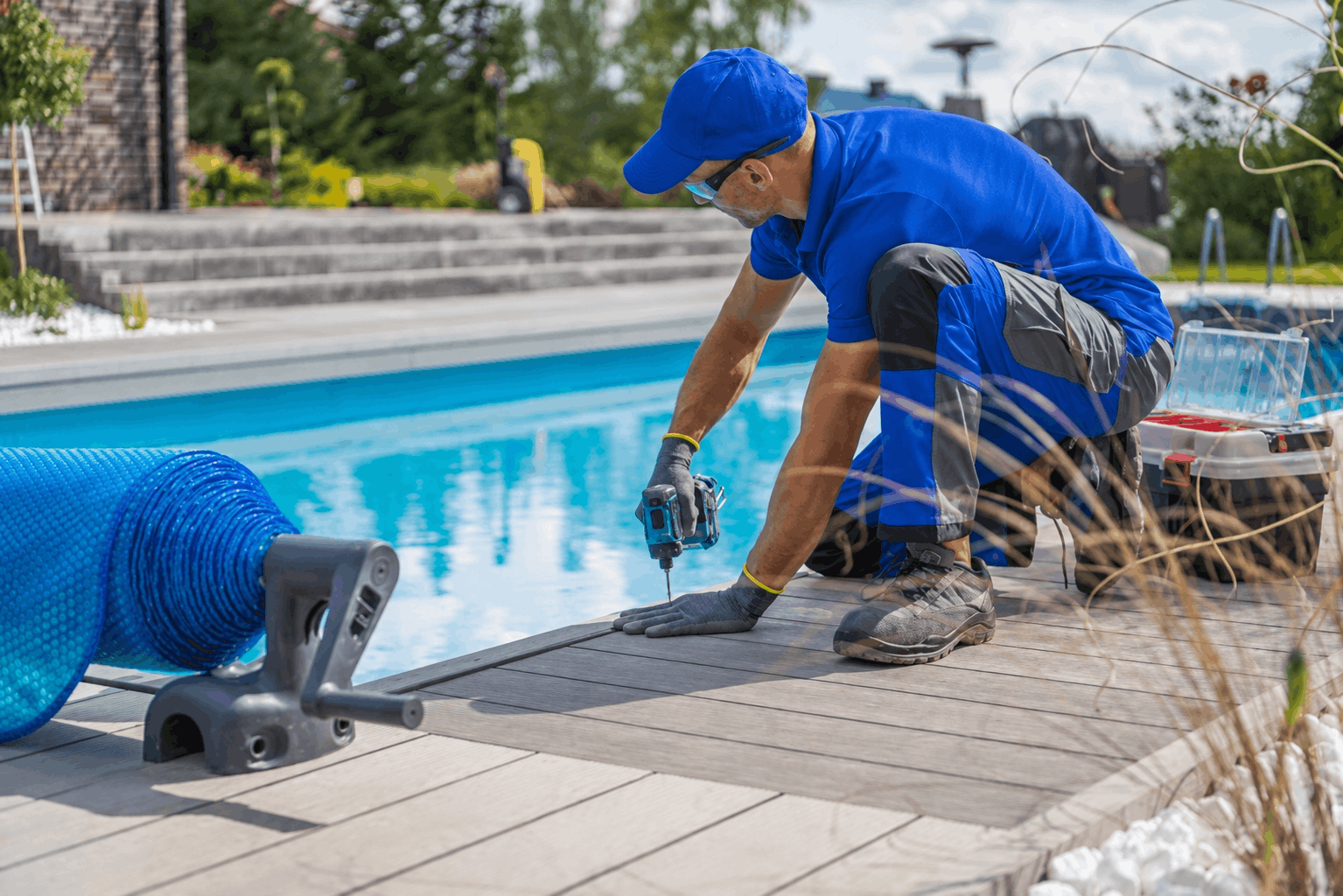
A damaged pool deck does more than affect the appearance of an outdoor space. Cracks, uneven sections, standing water, and deteriorating surfaces can make the area less comfortable and create safety concerns for anyone walking near the pool.
Homeowners in Rancho Mirage often deal with intense sunlight, high temperatures, dry soil, irrigation, and regular exposure to pool water. These conditions place ongoing stress on exterior concrete. Although some wear is cosmetic, other changes may signal movement beneath the slab or deterioration that will continue getting worse.
Recognizing the warning signs early can help you avoid larger repairs and protect the surrounding pool area. The key is knowing which problems can wait and which ones deserve prompt professional attention.
Cracks That Continue to Grow
Small hairline cracks commonly appear as concrete cures and responds to temperature changes. A narrow crack that stays level and does not expand may not require urgent work. However, homeowners should monitor it for changes.
A crack becomes more concerning when it widens, lengthens, or returns after previous repairs. Continued movement can indicate settlement, soil instability, inadequate joints, or poor support beneath the slab.
Pool decks throughout the Coachella Valley heat up during the day and cool after sunset. This repeated expansion and contraction places stress on the concrete. If the slab cannot move along properly installed joints, cracks may develop across open sections.
Filling a moving crack without identifying its cause usually provides only a temporary improvement. A contractor should first determine whether the damage remains stable and whether the surrounding concrete has shifted.
Uneven Sections and Raised Edges
One of the clearest signs that a pool deck needs attention is a difference in height between adjoining sections. Even a modest raised edge can create a trip hazard, especially when people walk barefoot or move quickly around the pool.
Uneven slabs may result from settlement, expanding soil, tree roots, erosion, or inadequate compaction during installation. Water entering through joints can also disturb the base beneath the concrete.
Look closely at areas near cracks, drains, coping, and deck edges. A section that has dropped may collect water, while a lifted slab can interfere with gates, furniture, or nearby structures.
Surface coatings cannot correct movement below the concrete. Before recommending pool deck repair, a contractor should evaluate the base and decide whether the section can be stabilized, lifted, repaired, or replaced.
Standing Water After Pool Use
Pool decks should direct water away from buildings and toward appropriate drains or runoff areas. Small amounts of water after swimming are normal, but puddles that remain long after the surrounding surface has dried can reveal a slope or drainage problem.
Standing water increases the chance of slipping and may leave hard water stains or mineral deposits. It can also enter cracks and joints, reaching the soil underneath the slab.
In Rancho Mirage, irrigation overspray can make the issue worse by repeatedly soaking the same sections. Over time, moisture may erode supporting material or contribute to uneven settlement.
Drainage problems sometimes begin with the original installation. In other cases, sections of the deck move and create new low points. Repairing the affected area early may prevent water from causing additional damage.
Flaking, Scaling, and Rough Concrete
A pool deck surface can gradually become rough, flaky, or pitted. This deterioration may result from age, installation issues, harsh cleaning methods, chemical exposure, or a finish that was not suitable for the environment.
Loose material should not be ignored. Once the upper layer starts breaking apart, moisture and contaminants can reach deeper into the surface. The damaged area may spread, creating uncomfortable sections for bare feet.
Surface deterioration does not always require full replacement. When the underlying slab remains sound, preparation and resurfacing may restore the deck. The contractor must remove weak material and create a stable surface before applying a new finish.
Simply coating over loose concrete can cause the new material to separate. Careful preparation plays a major role in the durability of repaired pool decks.
Separation Near the Pool Coping
The joint between the pool deck and coping allows the surrounding materials to move without pressing directly against one another. When this joint deteriorates, homeowners may notice gaps, cracked sealant, loose material, or separation along the pool edge.
Damaged joints can allow water and debris to collect in the opening. If moisture reaches the supporting soil, it may contribute to erosion or movement.
Separation near the coping may also indicate that the deck has shifted independently from the pool structure. This problem requires careful evaluation because an improper repair could place unnecessary pressure on nearby materials.
Replacing worn joint material at the appropriate time can protect the edge of the deck and help maintain a cleaner, more finished appearance.
Discoloration That Points to More Than Age
Fading is common on exterior concrete exposed to strong sunlight. However, dark patches, white deposits, rust-colored marks, or persistent damp areas may reveal more than ordinary aging.
White residue often comes from mineral deposits or moisture moving through concrete. Rust stains may develop around metal furniture, reinforcement, or irrigation components. Dark areas can indicate recurring moisture or organic buildup.
Cleaning may improve some discoloration, but it will not correct an underlying drainage or moisture problem. Before applying a new coating, identify why the stain formed and whether it is likely to return.
A professional evaluation can separate cosmetic concerns from signs of deeper deterioration.
When to Schedule a Professional Inspection
You should arrange an inspection when cracks keep expanding, sections become uneven, water remains in low areas, or the surface begins breaking apart. Prompt attention is also important when damaged concrete creates sharp edges or trip hazards.
The contractor should examine the visible damage, drainage, joints, slab movement, and surrounding soil conditions. This evaluation helps determine whether the right solution involves crack repair, resurfacing, partial replacement, or a completely new deck.
Not every problem requires major construction. Addressing a smaller issue at the right time may preserve more of the existing concrete and reduce future disruption.
Restore Safety and Comfort Around Your Pool
Pool deck damage rarely improves on its own. Cracks may spread, uneven areas can become more noticeable, and drainage problems may continue weakening the surrounding surface.
For an experienced assessment and durable options for pool decks in Palm Springs, CA, contact Innovative Concrete Design. The right repair should address the source of the damage while improving the safety, appearance, and usability of the pool area.
Continue the series with Pool Deck Installation in La Quinta: What Homeowners Should Expect to learn how proper preparation, drainage, placement, and finishing affect a new deck from the beginning.