
A stamped concrete project can add texture, character, and structure to an outdoor space, but many homeowners are not quite sure what happens once the work begins. They may know they want a new patio, pool deck, walkway, or courtyard surface, but they do not always know what the installation process involves.
Understanding the steps ahead of time can make the project feel much more manageable. It also helps homeowners ask better questions, prepare their property, and know what a professional job should look like. In Palm Springs, CA, where outdoor living areas are an important part of the home, good planning and proper installation can make a big difference in the final result.
It Starts With a Site Visit and Design Discussion
Before any work begins, the contractor typically visits the property to review the area and discuss the homeowner’s goals. This is when the layout, measurements, pattern options, color choices, and project purpose are discussed.
A patio project may focus on outdoor dining and lounge space. A pool deck may need to tie into the surrounding design. A front walkway may need to improve curb appeal. Each of these uses affects the layout and finish.
For homes in Palm Springs, CA, design choices often reflect the local style. Stucco homes, desert landscaping, mid-century lines, gravel beds, and open outdoor areas all influence what patterns and colors make sense. A good contractor helps narrow down the options based on the property rather than pushing one generic look.
The Work Area Needs to Be Prepared
Once the plan is finalized, the job site needs to be prepared. This may involve removing old concrete, clearing soil, taking out grass or decorative material, and shaping the area where the new concrete will go.
The base is then compacted so the stamped concrete has proper support. A stable base is essential because it helps reduce movement, settling, and uneven surfaces later. If this part is rushed, the finished project may not hold up as well over time.
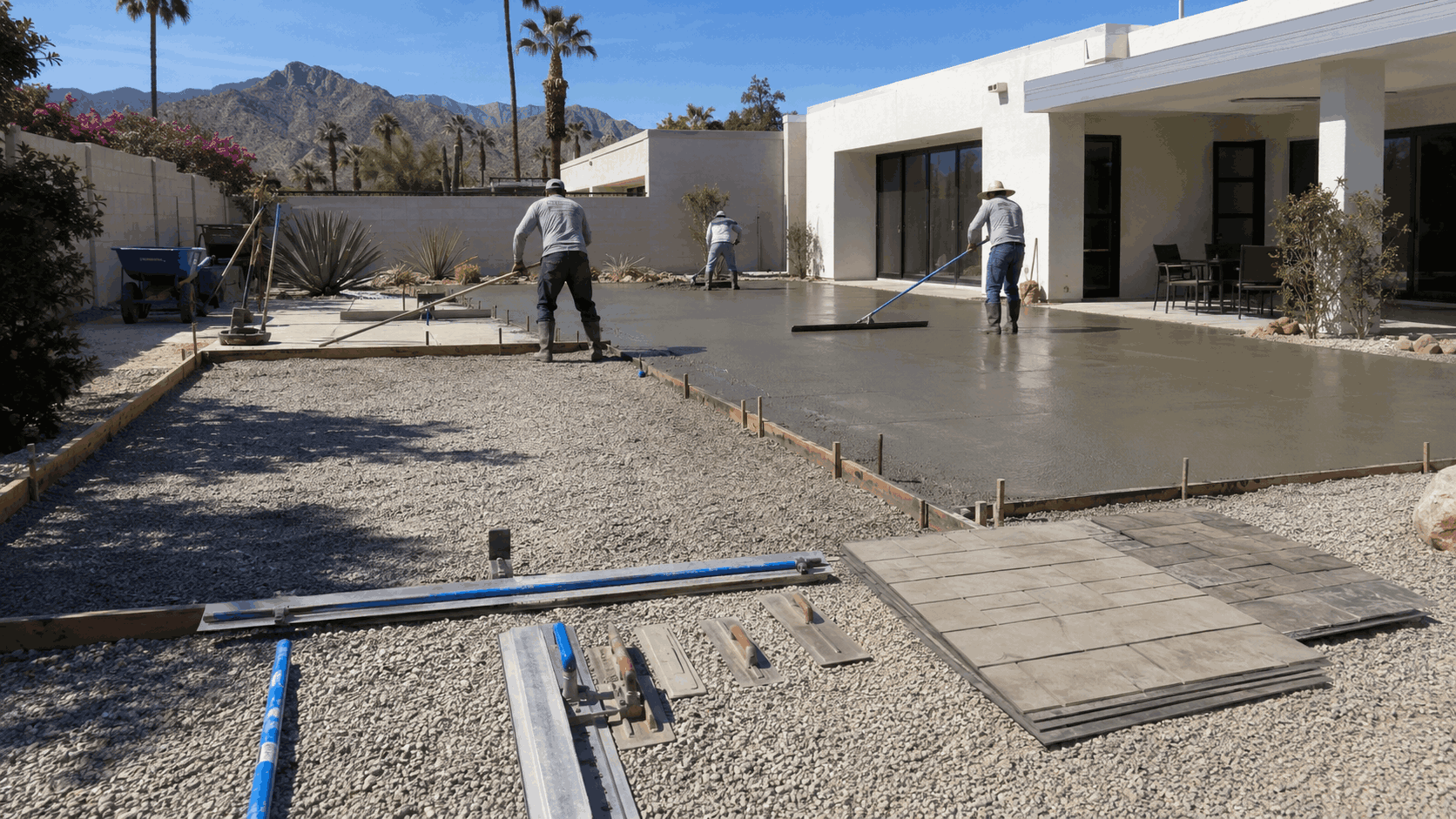
Forms are also placed around the perimeter of the project. These create the outline of the finished surface and help define curves, edges, and layout details. Homeowners can usually expect the job site to look a little rough during this stage, but a professional crew should still keep the area organized and safe.
Pour Day Moves Quickly
Once the area is ready, the crew pours the concrete. This part often moves faster than homeowners expect because the concrete has a limited window for working, leveling, and stamping.
After the pour, the crew spreads and smooths the concrete to the right height and shape. Then they watch the surface carefully as it begins to set. Timing matters a great deal here. The surface needs to be ready for stamping at just the right moment.
In Palm Springs, CA, heat can speed up the process. Sun exposure, temperature, and dry conditions can all affect the working time. An experienced crew plans for that and adjusts the pace of the work to protect the quality of the finish.
Color and Pattern Are Added During Installation
Many homeowners are especially curious about when the decorative part happens. Color may be added in different ways depending on the project. Some jobs use integral color mixed into the concrete, while others use surface hardeners, release agents, or additional coloring methods.
The stamping itself happens while the concrete is still workable. Large textured mats are pressed into the surface to create the chosen pattern. This is the stage where plain concrete begins to look like slate, stone, brick, or another decorative material.
A good crew works carefully to keep the pattern aligned and consistent. They also pay attention to edges, corners, and transitions so the finished project looks intentional rather than rushed.
Expect Some Cleanup and Detail Work After Stamping
Once the pattern is in place and the concrete begins to set, the crew moves into the detail stage. This includes cleaning the area, refining edges, touching up small spots, and addressing any extra release material left on the surface.
Control joints are another important part of the process. Concrete naturally moves over time, and these joints help guide where cracking is more likely to occur. While joints cannot prevent every issue, they do help reduce random cracking across the visible surface.
For decorative projects, the placement of those joints matters visually as well. A contractor who understands stamped concrete will try to place them in a way that works with the pattern and overall design.
Sealing Happens After the Surface Is Ready
Sealing gives stamped concrete its finished appearance and adds a layer of protection. It can enhance the color, bring out the texture, and help the surface resist stains and weathering.
In Palm Springs, CA, sealing is an important step because outdoor surfaces often deal with strong sun, dust, and regular use. A properly sealed patio or walkway is generally easier to maintain and can keep its appearance longer.
Homeowners should know that sealing does not happen carelessly or at random. The surface must be ready, and the conditions need to be right. If the sealer is applied too early or under poor conditions, the result may look cloudy or uneven.
The New Surface Still Needs Time to Cure
Even after the project looks complete, the stamped concrete still needs time to cure. This means homeowners usually cannot use it fully right away.
Light foot traffic may be allowed after a short period, but heavier use must wait longer. Patio furniture, grills, potted plants, and vehicles should not go back on the surface until the contractor says it is safe. The exact timeline depends on the type of project, the weather, and the concrete conditions.
During this time, homeowners should follow care instructions closely. Avoiding heavy use too soon helps protect the finish and gives the surface time to gain strength.
Good Communication Makes the Process Easier
One of the best things homeowners can expect from a professional installation is clear communication. A good contractor should explain the schedule, what the crew will do each day, how long curing may take, and what the homeowner should avoid during and after the project.
That matters because every property is a little different. A backyard patio installation may be more straightforward than a custom pool deck or courtyard with curves and multiple sections. Good communication helps avoid confusion and keeps expectations realistic.
If you are thinking about upgrading your outdoor space, Innovative Concrete Design can help guide you through the process and explain what makes sense for your property.
You can also learn more about stamped concrete if you are comparing surface options for a patio, pool deck, walkway, or courtyard.
Final Thoughts
Stamped concrete installation is a process with several moving parts, but homeowners do not need to feel overwhelmed by it. When the project is planned well and handled by an experienced crew, each phase has a clear purpose.
For properties in Palm Springs, CA, the key is choosing a layout and finish that fit both the home and the climate. From preparation and pouring to stamping, sealing, and curing, every step contributes to the finished result.
After installation, the next question most homeowners have is how to take care of the surface over time. Read How to Maintain Stamped Concrete So It Keeps Looking Good to learn how to protect the appearance and performance of your investment.